

Low energy
Persistent tiredness can make important work feel heavier and reduce your ability to recover after busy periods.



Free workplace stress questionnaire
Stress management is the ability to stay rational, balanced and effective when pressure increases. This questionnaire helps you reflect on your current response to workplace pressure, energy, sleep, focus and emotional resilience.
Check common workplace stress signals, including overwhelm, sleep, energy, focus and peace of mind, and receive a reflective stress management score without giving an email address.
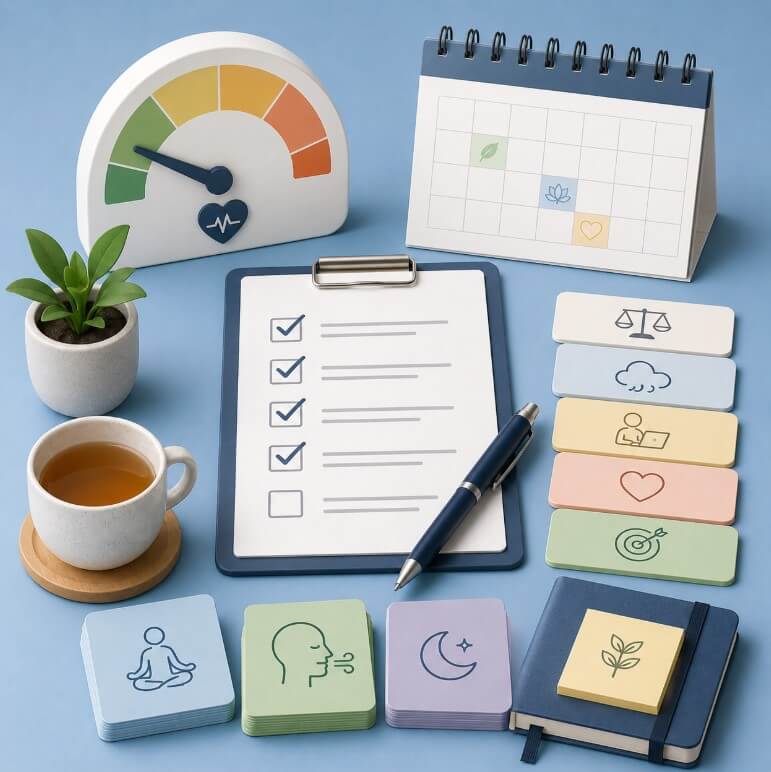
Reflect on early warning signs such as overwhelm, disrupted sleep, low energy and difficulty focusing.
Notice whether pressure affects your decisions, relationships, motivation and emotional reactions.
Receive your stress management score and answer-by-answer reflections as soon as you submit.
Understanding the skill
Stress management is the practical skill of keeping your thinking clear and your behaviour constructive when demands, uncertainty or pressure increase. It does not mean avoiding all pressure. A limited amount of challenge can focus attention and encourage growth.
Problems begin when pressure becomes excessive, prolonged or poorly managed. At that point it can affect judgement, communication, sleep, physical energy, emotional reactions and the ability to solve problems rationally.
Good stress management combines practical control with emotional discipline. The practical side includes priorities, planning, communication and problem solving. The emotional side includes self-control, perspective, recovery and the ability to respond rather than simply react.
Workplace impact
Workplace stress affects more than personal comfort. It can change the quality of decisions, reduce patience, weaken concentration and make ordinary problems feel larger than they are.
Managers and team leaders need stress management skills because their response to pressure influences the emotional tone of the team. Calm priorities, clear communication and rational problem solving help others stay focused.
Individuals benefit too. When you can manage pressure without becoming overwhelmed, you are more likely to maintain confidence, resilience, productive energy and professional relationships.
Practical signals
This questionnaire is reflective, not diagnostic. Use these examples as prompts to notice patterns, not as labels or medical conclusions.
Persistent tiredness can make important work feel heavier and reduce your ability to recover after busy periods.
When problems feel more powerful than your ability to handle them, thinking can become scattered or defensive.
Difficulty getting to sleep or staying asleep can make pressure harder to handle the next day.
Stress can make people more reactive, less patient and more likely to misread other people's intentions.
Pressure can make decisions feel risky, causing delay, doubt or repeated second-guessing.
Without recovery, pressure accumulates. Better routines help restore attention, energy and emotional control.
This questionnaire is designed for workplace reflection and personal development. It is not a medical or psychological diagnosis. If stress symptoms feel severe, persistent or difficult to manage, seek appropriate professional support. For practical workplace methods, our Stress Management Training course teaches tools for managing pressure, priorities, emotions and problem solving.
Questionnaire
Answer each question honestly according to your recent experience. Your score is a reflective indicator of current stress management habits, not a diagnosis.
of answered
Next steps
Learn practical methods for handling pressure, maintaining emotional balance and solving problems rationally.
Reduce avoidable pressure by improving planning, prioritisation, delegation and productive work habits.
Talk through your workplace pressure points and choose the right development route for yourself or your team.
Using your results
Treat your results as a snapshot of your current stress-management habits. Look for repeated themes: overload, poor sleep, low energy, difficult decisions, emotional reactivity or avoidance of important tasks.
Choose one improvement area first. For example, if you feel overwhelmed, clarify the next practical action. If decision-making becomes difficult, write down the facts, options, risks and first step instead of keeping the problem only in your head.
Retake the questionnaire after a period of deliberate practice. The aim is not to chase a perfect score, but to become calmer, more rational and more effective under pressure.
Related development areas
Build the core methods for maintaining composure, perspective and effective action under pressure.
Strengthen confidence, goal focus, communication and emotional control as broader personal effectiveness skills.
Use a wider self-analysis questionnaire to identify which workplace skills would produce the greatest improvement next.
Discuss your team's stress, workload or resilience challenges and choose the right training route.
Common Questions
Answers to common questions about workplace stress, stress management and how to interpret this questionnaire.
A stress management questionnaire is a reflective self-assessment that helps you notice patterns in pressure, energy, sleep, focus, decision-making and emotional balance.
No. This questionnaire is a personal development tool for workplace reflection. It is not a medical, psychological or diagnostic assessment.
Yes. Stress management improves when you clarify priorities, plan ahead, control your attention, communicate clearly, solve problems rationally and build better recovery habits.
If stress symptoms feel severe, persistent or difficult to manage, seek appropriate professional support. For workplace skills, stress management training can help you build practical methods for handling pressure more effectively.