







Emotional Intelligence Training
Emotional intelligence training is intended to help you understand why people do the things they do.
Emotional intelligence training covers topics such as:
- How to create positive emotions, in yourself and others
- How to handle negative emotions, in yourself and others
- How to change negative situations into positive situations
- That all emotions are the products of thought
- How to control your emotions by taking control of your thoughts
The Emotional Management Cycle
Your emotions tend to show up in your external results. The process looks like this:
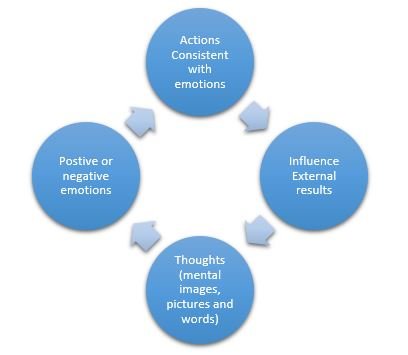
Thoughts - mental images, words and beliefs - combine to produce emotions.
- Emotions combine to affect actions.
- Actions combine to affect results.
- Results combine to affect thoughts.
Harness the Power of Great Expectations
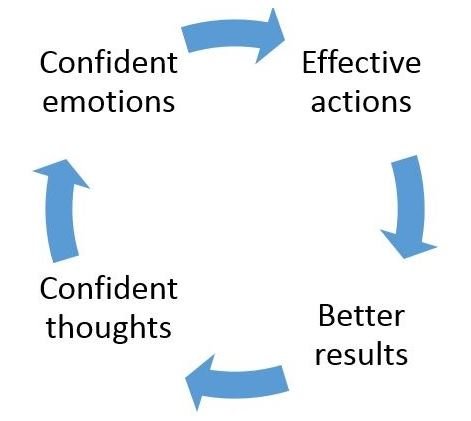
If you concentrate your mind on having only positive thoughts, then you will experience only positive emotions.
Learn how to use the emotional management cycle to your advantage. Look at this cycle and start with confident thoughts.
Conversation Control
Just as thoughts affect feelings, actions and results, so too can the content of your conversation affect the thoughts, feelings and actions of others.
It is, therefore, important to take control of the content of your conversations and direct them away from too much talking about:
1. The Bad past; which always tends to create emotions of anger and upset. Conversations that concern all the bad things that have happened in the past tend to create negative feelings.
2. The Bad future; which tends to create emotions of fear, anxiousness, upset and worry. Conversations that concern all the bad things that may happen in the future, also tend to create negative feelings.
Target your conversation onto a BETTER FUTURE; which will tend to create emotions of optimism, enthusiasm, motivation and energy.
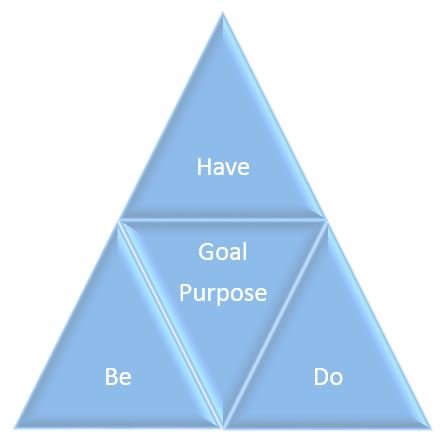
Positive emotions can be triggered very quickly by talking, thinking and asking about goals for the future.
Ask other people about their goals for the future. You can always make someone feel better simply by turning the conversation onto the topic of the other person's goals, wishes, desires, aspirations and ambitions.
Change the focus of a conversation onto more productive paths.
Try to distract people off the negative conversations and get them talking about solutions rather than their problems.
Take control of your conversations and direct them away from threats of a bad future, or the pain of the bad past.
Redirect the conversation onto the prospects of a prosperous, fun future.
That is the essence of conversation control; the secret of emotional management.
One-Day Emotional Intelligence Training Course
This course is also run as a one-day in-house Emotional Intelligence training course, which we offer throughout the UK and worldwide. Contents can be tailored to fit the needs of your organisation.
Quiz: Emotional Intelligence (EQ)
Try our Emotional Intelligence quiz to discover how well you are able to manage your emotions and the emotions of others.
[Training Banner]
Emotional Management Cycle
The emotional management cycle is a simple model used at work to show how what you think leads to how you feel, how you feel drives what you do, and what you do gives results that then shape new thoughts. Change any thought and you change the full cycle.
CG4D Definition
Context: Business
Genus: Model
- Begins with personal thoughts
- Thoughts create matching emotions
- Emotions drive chosen actions
- Actions deliver results that loop back to thoughts
Article Summary
Emotional intelligence training shows that the thoughts you choose shape the feelings you feel, the acts you take and the results you get. When you steer your mind and talk toward clear goals, you spark positive emotion in yourself and others and turn problems into progress.