






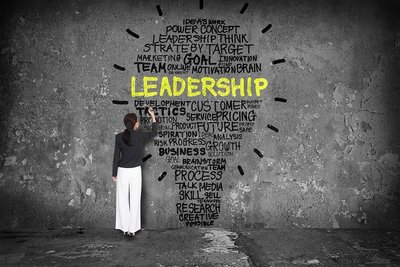
How to Improve Your Leadership Skills
Leaders communicate goals, formulate plans and inspire others to commit.
The skills you need to be an effective leader are:
- Commitment.
- Goal setting.
- Communication skills.
- Planning
- Prioritising.
- Delegation.
- Inspiration.
Commitment.
The key difference that marks out a leader is commitment.
Leaders have the courage to commit 100% to a goal.
Most people are not interested in achieving anything of great value and / or they are afraid to commit themselves 100%.
To be a better leader, be willing to give total commitment to a goal.
Goal setting.
You cannot commit to a goal you never set.
Leaders are goal-focused.
They think about their goals, they talk about their goals, they write about their goals, they dream about their goals.
If you want to be a better leader, then fix your mind upon a worthwhile and valuable goal and then talk, write and dream about how you can achieve it.
Communication skills.
It is not enough to talk to yourself about the goal.
You must engage the minds of others.
Communicate your vision to as many people as you can.
You need to gain the willing cooperation of other people.
Talk to people and explain to them what the goal is, why it is important, and how it can be achieved.
Planning.
The "how" you are going to achieve the goal, becomes the detailed written plan that details the steps needed to be taken, in order to make progress towards the goal.
If you want to be a good leader, become a good planner.
Good leaders are good planners.
To be a good planner, then you need to develop your skills of analysis.
Break the main goal into a series of subordinate tasks, put the tasks into a logical order. This is your plan of action.
To be a good leader, you should develop your planning skills.
Prioritising.
During the planning stages, you need to put things into a logical order. This is prioritisation.
Prioritisation can mean two things:
- Putting tasks into order of value.
- Putting tasks into their most effective logical sequence.
If you want to be a good leader, you must understand the relative value of tasks, ie what is important and what is trivial.
And you must understand the importance of systems thinking. Doing the right things in the right order.
Delegation.
A leader does not do all the work themselves.
Instead, they delegate.
Leaders delegate the right tasks, to the right people, at the right time.
This is a skill you need to develop.
Poor leaders don't delegate effectively.
Good leaders always do.
Inspiration (motivation).
Not all tasks you delegate are pleasant tasks.
So, the people who actually do the spade-work, need inspiration and motivation.
The role of the leader is to provide the proper motivation and inspirational leadership, that will maintain a positive attitude in the team.
If you want to be a good leader, practice the art of inspiring others.
Master the art of inspirational leadership, by attending our two-day Inspirational Leadership Training Course.
Leadership
Leadership is a workplace capability. It lives in people who set clear goals, commit fully, share the picture in plain words, organise tasks in sound order and lift spirits so others choose to act. Remove any one of these four traits and the effort stops being leadership and becomes simple task management.
CG4D Definition
Context: Business
Genus: Capability
- Sets and commits to clear, worthwhile goals
- Communicates the vision in plain, honest words
- Plans, prioritises and delegates tasks in sound order
- Inspires and motivates people to act willingly
Article Summary
Great leaders commit to clear goals, share them with the team, plan each step, set priorities, give the right jobs to the right people and lift spirits with honest praise; train these habits daily and your leadership will soar.