






Learning and development training. The Learning organisation
Let me ask you a question:
Is your organisation a Learning organisation?
A learning organisation is one that recognises the need for continuous learning and personal development. This need for continuous learning and development is being driven, primarily, by advances in technology.
Technological advance drives change
Technological advance is changing the way that people do business and trade with each other. In practically all sectors of the economy, there is currently a revolution based on advances in communication and information technology. They call it "the internet revolution".
The internet revolution
Is the cause of huge changes in high street shopping, banking, politics, economics, law, education and the delivery of public health.
As a result of these revolutionary changes, each person and every organisation needs to commit themselves to a process of continuous learning and personal development.
Continuous learning and personal development.
Let me ask you a question:
How teachable are you?
Do you know anyone to whom you can't teach anything?
He is a bit of a "know all".
He or she seems to think that he knows everything.
He cannot be taught anything.
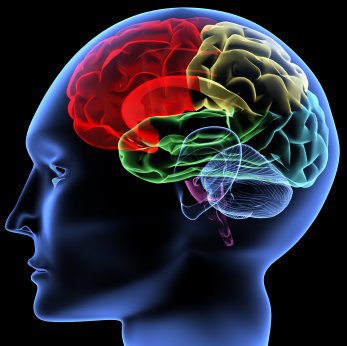
Closed minds
This type have closed minds.
They are closed to all further learning, closed to any new idea. Any new idea that he is exposed to, bounces off his mental force field: Meaning; he has developed an impregnable force field of resistance to new ideas and information.
These people are unteachable.
I call them, "The Unteachables".
The Unteachables
The unteachables are a strange mix of both arrogance and fear.
An unteachable person, simultaneously, seems to be both arrogant, and fearful.
On the one hand, he acts as if he knows the answers to all the world's problems. He could tell you how to fix the organisational problems, he could tell you how to fix the Nation's problems and he could fix the global problems.
And yet on the other hand, he runs scared every time you ask him to learn something that will take him out of his comfort zone.
When out of his "comfort zone" he seems fearful.
We must not become one of the Unteachables.
We need to become ever more teachable.
Be ever more teachable
We need all the people in our organisation to become more:
- Eager to learn a new technology.
- Eager to read another book.
- Eager to learn a new approach.
- Eager to learn from our past mistakes.
- Eager to drop what we have done in the past, and be willing to move to the new ways.
1. Learn the new technology.
People have been afraid of new technology since the Stone Age.
New technology gives the person who has it the competitive advantage. If your tribe has the iron tools and I have only stone tools, then my people will leave my tribe and join your tribe.
They do that because improved technology means a greater chance of survival and prosperity.
If you don't keep up with new technology you will go extinct.
Yet many people fight the advance and resist it.
You can see this battle being fought today in the post office and in the London transport. Both groups are fighting against the introduction of new technology.
This is weird behaviour.
It is counterproductive and non-progressive. In the long run, new technology adds to employment, (look how many people are now employed in the mobile phone industry, as compared to that industry 20 years ago).
New technology does not destroy jobs.
New technology changes the nature of the work, it kills off some jobs and creates many others.
But the individual worker must learn to use the new technology or face extinction.
Embrace the new technology.
2. Read another book
Leaders are readers. If you don't read, how are you going to have a new idea? You need the creative imagination of other minds to stimulate your own mind.
Read more.
Invest in a library of great NON fiction books.
3. Learn a new approach
Look at the way the world is going. Robotics. Biotechnology. Information technology. Globalisation.
Learn to go in the direction of travel. Don't try to stop the train. Get on the train and learn how to drive the thing!
4. Learn from past mistakes
Each time you try something new, you will make mistakes. This is new technology.
It is still developing and things will go wrong. Learn the lessons and press on.
5. Drop what you have done in the past, and be willing to move to the new ways.
Just because it used to work well, does not mean it will work well again, next year.
If done in exactly the same way, then what worked last year, may well fail, this year.
Because the market place has changed since last year, you may need to keep reinventing yourself.
- Like Madonna
- Like Kylie
- Like Microsoft
- Like Apple
They keep coming back with a new version.
You too, need to reinvent yourself and come back tomorrow with the improved, updated version.
Learning and development training.
If you want to know about our learning and development training, please follow this link.[Training Banner]
learning organisation
In business, a learning organisation is an organisation where everyone keeps learning, shares knowledge, adapts work methods when new ideas or tools arrive, and treats mistakes as lessons. If any of these parts disappear, the organisation stops being a true learning organisation.
CG4D Definition
Context: Business
Genus: Organisation
- Commits to continuous learning for all staff
- Opens and shares knowledge across the whole group
- Changes systems and actions in line with new facts or technology
- Uses every error as a chance to improve
Article Summary
A learning organisation stays ahead when every person stays teachable, welcomes new technology and keeps improving skills; when learning never stops, progress never stops.