







How to Improve Memory
To improve your memory the first thing to do is to accept the idea that memory improvement is possible for everyone; including you.
It is possible because your memory is not a fixed attribute, but is rather, an active process.
Many people have the mistaken idea that they have been given a fixed capacity for memory, which has been found always to be rather scanty, and that with age, that limited supply of memory-power inevitably runs down, like a battery, and your capacity to memorise, inevitably, first falters, then fails.
How sad is that?
The happier truth is, that memory is NOT a fixed supply that inevitably runs down. Rather, your memory is a process that has an unlimited potential, provided that you do two things:
- Use it.
- Train it.
There is a rule that governs all human processes: the rule is this: Use it, or lose it!
Use your memory or lose it
In nature, whatever you don't use, you lose. If you don't use your arm muscles they shrivel up. If you don't use your legs they shrivel up.
In fact, if there is any part of your anatomy you don't use, then it may shrivel up. (You may have already noticed!)
Same with your intellectual powers. If you don't do maths, your capacity to do maths evaporates.
So the first thing to do, if you want to improve your memory, is to try to memorise things. On purpose.
First exercise for you to practice
When you listen to the next news broadcast, make a supreme and conscious effort to memorise the events listed in the news and the order in which they were given. In a half hour news program there is usually between 8 and 12 items of news.
Second exercise for you to practice
When you next watch a movie, try to memorise the names of all the characters that appear in the movie, as they are introduced. Every character's name that comes up, try to learn it as you hear them.
These two exercises you should do every day. Then you will gain skills at two important things.
- Learning facts.
- Learning people's names.
But this idea will only work if you work the idea.
Here is part two of the method:
Train your memory by studying memory techniques
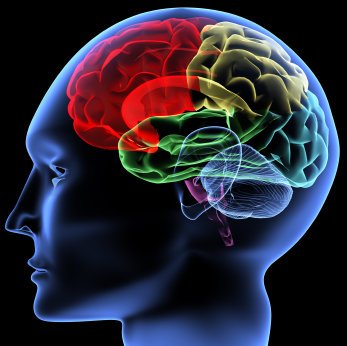
Just as there are techniques you can learn to improve your ability to play chess, or mental arithmetic, or scrabble, so there are techniques that you can use to improve your memory power.
These techniques have a name: mnemonics.
Mnemonics are mental techniques that you can learn that will make your memory more productive.
All mnemonics rely on the same principles
There are five principles of mnemonic techniques.
Here they are:
Please notice I have arranged the following five points to spell out the word, R.A.I.S.E.
Raise your memory power by the following RAISE formula.
RAISE means:
- Repetition. You need to repeat the information-memory to yourself at least five times.
- Association. You need to try to associate the information that you want to learn to something that is already familiar.
- Imagination. Memory techniques often rely on the power of your mind to create mental images to make the association. It is said that your imagination is the memory's main motor.
- Structure. It is important to put information into logical categories before you try to memorise it. As opposed to having a disordered chaos, your mind works better when things are sorted into similar sets.
- Effort. As we have already seen, it takes conscious effort to improve any aspect of your performance. Your memory won't work, if YOU won't work.
If you will agree to train your memory, like you would train an athlete, then your memory will respond to the proper training. Eagerly!
Summary
Your memory is NOT a fixed supply that inevitably runs down.
Your memory is a process that has an unlimited potential, provided that you do two things:
- Use it.
- Train it.
To use it: make a supreme and conscious effort to memorise the events listed in the news programmes. And try to memorise the names of all the characters that appear in the next movie you watch. Then you will gain skills at two important things; learning facts and learning people's names.
To train your memory: memorise and utilise the RAISE formula.
- Repetition.
- Association.
- Imagination.
- Structure.
- Effort.
[personal Banner]
RAISE memory formula
In learning and development, the RAISE memory formula is a five-step method for boosting recall. It combines Repetition, Association, Imagination, Structure and Effort, uses the acronym “RAISE” for easy recall, demands daily deliberate practice, and targets both encoding and retrieval of information.
CG4D Definition
Context: Learning and development
Genus: Formula
- Combines five ordered actions-repetition, association, imagination, structure, effort
- Uses the acronym “raise” so the steps are self-reminding
- Requires daily deliberate practice on real-world material
- Aims to improve both storage and retrieval of new information
Article Summary
Memory is a skill, not a fixed gift; use it each day and train it with the RAISE formula-repeat, associate, imagine, structure and make an effort-and you will remember facts, names and life events with growing ease.