







How to Handle Stress
During our leadership and management training courses, the issue of "stress" often comes up. Many delegates report that they feel stressed, and the word "stressed" always denotes a negative thing. The idea is always, "stress is bad".
Stress is indeed bad. But not always. Sometimes stress can be good for you. It depends on what kind of stress it is; and how you deal with it.
Stress can be good for you
Stress can be good for you because you are an adaptive organism. You adapt, (get better) when you need to. And the imposition of a stress is often the catalyst for a big improvement. For example; an athlete, like Jess Ennis, sometimes trains hard on the weights. She purposefully imposes an intense training stress on her muscles.
Why would she do that? To trigger an adaptive response. To get stronger, to get faster, to get better.
You too will get stronger, faster and better, only if you need to. And the stresses of life are often the trigger to gain more emotional strength.
Stress gives you strength. Stress gives you strength and therefore stress is good for you.
Think of your stress as a "workout with weights". The more you lift, then the greater the stress, and the stronger you'll get.
Just like Jess, you could think to yourself: Stress makes me stronger.
Stress makes you stronger
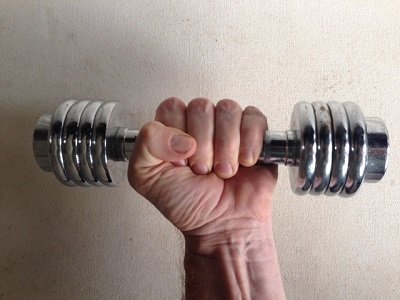
Stress makes you stronger, BUT only if it is managed. Meaning: stress can make you stronger, but only so long as you don't overdo it.
Just as weight training can make you stronger, it is always possible to overload the barbell and put yourself under too heavy a load.
If an athlete over-imposes the training stress, then they will over train and they will suffer either an injury, or burnout.
An injury is a sharp pain caused by something particular giving way under load.
A burnout is a more general fatigue of the whole mind and body and it causes a person to lose all enthusiasm and motivation.
Athletes often suffer burnout and that leads to injury. Paula Radcliff reached the burnout stage where she found she just could not continue and she collapsed in a heap. The cause was simply too much stress, too often, for too long.
Stress is good, but it must not be too intense, nor applied too often, for too long. If you overdose on stress, you will burnout and collapse in a heap.
The beauty of balance
Like everything in nature, there is a perfect and beautiful balance to be found between being stressed and not being stressed. There is a balance to be found between being stressed and being overstressed.
You need to stress yourself in order to trigger an adaptive response, and get better, stronger and faster. But you must not overdo it and crash out.
Moderation in all things. Take nothing to excess. Try to find the balance that exits between the two extremes of not enough stress and too much.
Push and rest
Life is full of stress. It will push you to your limits. Which is good; because being pushed to your limits will cause you to improve.
But you need to balance the push with some rest. Recuperation. Rest and renewal. Eat well and sleep. Relax and grow.
If you can get the balance between pushing hard and resting easy, then you will get the best of both worlds and your continued progress will be assured.
If you manage your stresses, one day we will see you on the winner's podium receiving the highest accolades and winner's medal. Which would be wonderful.
Quiz: How good are you at managing your stress?
Try our Managing Stress quiz to discover exactly how good you are at dealing with stress.
[goal Banner]
good stress
Good stress is the helpful weight you feel when work pushes you just enough to grow. In business it is a kind of stress that raises effort and learning because it is moderate, short-lived, matched to your ability and balanced by planned rest and recovery.
CG4D Definition
Context: Business
Genus: Form of stress
- Leads to growth in skill, strength or work results
- Force stays within the person's current limits
- Comes in short spells with enough rest after
- Felt as a helpful test, not a threat
Article Summary
Stress works like lifting weight: the right load followed by rest builds strength, but holding it too long breaks you. Balance push and pause to turn good stress into growth and sidestep burnout.