






Avoiding Overwhelm
How to keep a clear mind when there's too much to do
Last week, when I presented our two-day Leadership and Management training in London, one of the delegates said she was attending because she was suffering from a feeling of overwhelm.
Overwhelm is a negative emotion that many people feel when they compare the list of things they have to do against their ability to deal with them.
The Balance Between Demands and Ability
If you perceive your ability to deal with the demands on you as greater than the demands themselves, then you feel confident.
But if you perceive the demands as greater than your ability to handle them, you feel overwhelmed.
Overwhelm is dreadful because it shuts down the mind. It makes us less able to cope with the very things that caused it. People go blank. The mind freezes. Nothing seems to work. Anxiety rises, which only makes matters worse.
Too Much to Do vs Doing Too Much
The first step to escaping overwhelm is to see the difference between having too much to do and doing too much.
There is always too much to do. The problem is attempting to do too much; trying to think about too many things at once. This is the cause of overwhelm.
The Limits of the Human Mind
Despite the popular idea that the human mind is infinite, it isn't. Nothing in the universe is infinite. Everything is finite, including our mental capacity.
The working memory-the part of the mind that holds information for immediate use-can handle only about seven, plus or minus two, items (somewhere between five and nine things) before it starts to overload.
If I showed you a series of playing cards one at a time, you'd probably remember four to nine before making mistakes. That's because your mind, like mine, has limits.
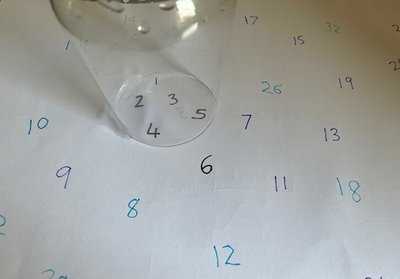
The Glass on the Table
Imagine your mind as a glass. That glass can only encapsulate a certain number of things within its circle; perhaps five.
The point is: never try to do more than the glass circumference can enclose. Never try to do everything at once, because that's when overwhelm begins.
Instead, select three to five things to focus on at any given hour.
When you place your mental glass down on the table of reality, those are the things inside it. Everything else should disappear from your mind while you deal with them.
Then lift the glass off the table. Rest. Have a drink of water. Recover your energy.
When you're ready, choose the next small set of tasks, place your glass back down, and focus again.
Step by Step Progress
Work on the three to five selected tasks until you can go no further. Then lift the glass again, rest, walk a little, say hello to a friend, and return refreshed.
This is how we handle the endless list of things to do. We work in small, deliberate steps; placing the mental glass down, encapsulating three to five items at a time, then resting and repeating.
If we do this, we never feel overwhelmed because we are never trying to do everything at once. We are selective. We prioritise according to value and deadline. We make steady progress in a systematic and focused way.
The Simple Rule
That's what I explained to my wonderful delegate on the course, and she found it very helpful. She even mentioned it again during the tea break.
I hope you find it helpful too; it certainly helps me.
Keep in mind the picture of the glass on the table. It can encapsulate only three to five things at any one time. That's how your mind works best.
Three-to-Five Focus Rule
In the workplace, the Three-to-Five Focus Rule is a simple focus technique. A person picks no more than five tasks, shuts out all others, and gives full thought to this small set. When done or stuck, they pause to rest, then pick the next high-value set. The method keeps the mind clear and stops overwhelm.
CG4D Definition
Context: Workplace productivity
Genus: Technique
- Limits current work to three to five tasks
- Blocks all other tasks from thought until break
- Includes a short rest when the set is done or progress stalls
- Starts again with the next high-value tasks
Article Summary
Overwhelm fades when you treat your mind like a small glass: hold only three to five tasks at once, give each full focus, then lift the glass, rest, and choose the next set; this simple cycle keeps work clear, cuts anxiety, and drives calm progress.