


Corporate Coach Group Logo
Corporate
Coach Group
Personal Development · 2 min read

A Simple Trick to Help You Develop More Self-Discipline

Learn a simple discipline trick: replace every 'should' with 'must'. Boost self discipline, cut delay and hit goals with word power shown by 2024 studies.

Chris Farmer, Founder of Corporate Coach Group

“Swap every casual "should" in your self-talk for a firm "must" and you change loose hopes into urgent commands; this tiny word shift sparks self-discipline, drives action and keeps your goals on track.”

Chris Farmer — Founder, Corporate Coach Group

A Simple Trick to Help You Develop More Self-Discipline

A Simple Trick to Help You Develop More Self-Discipline

If you had more self-discipline, would you benefit? Probably, yes.

The way to develop more self-discipline is to learn a simple phrase, and then repeat it to yourself, whenever you hear the word, "Should".

The phrase is, "If you should, you MUST!" - emphasise the MUST.

The trick is that simple!

How the self-discipline trick works.

If you were to say to yourself, "I should exercise today", then immediately rephrase the statement to become: "Today, I MUST exercise".

Really push down on the word "must" and use it to create an inner sense of compulsion.

"I should get out of bed now" transforms into, "I MUST get out of bed, NOW!"

"I should call Gavin and find out how he is getting on" transforms into, "TODAY I MUST call Gavin"
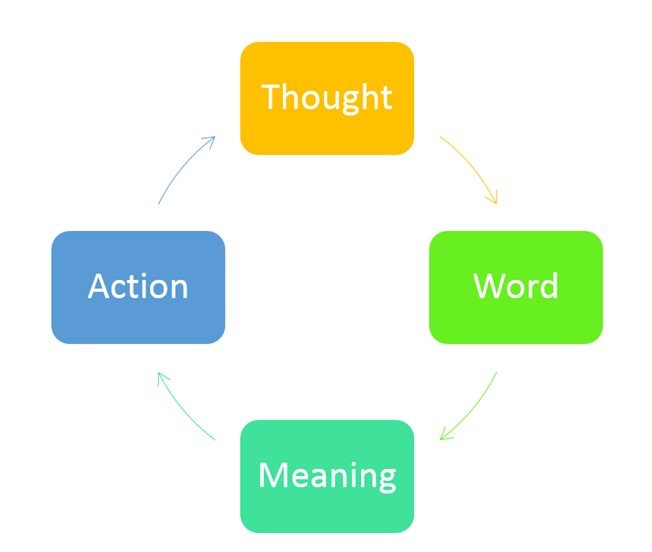
Why the self-discipline trick works.

This technique works because your mind uses words to give meaning to its thoughts.

Think carefully about that sentence: Your mind uses words to give meaning to its thoughts.
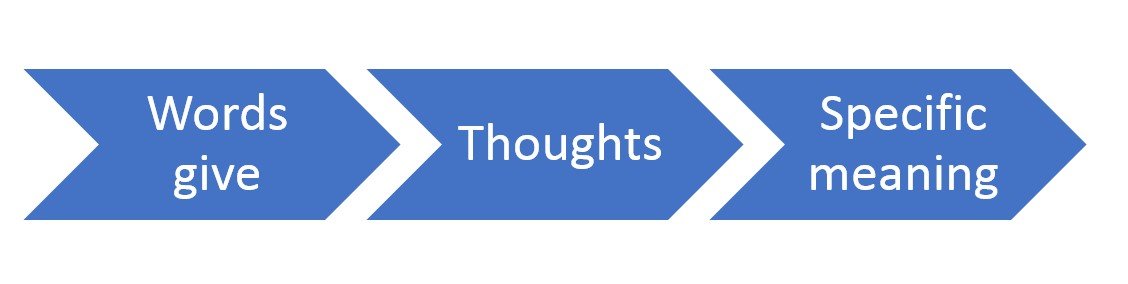
Therefore, your words affect your actions because every action you take is governed by a specific thought.

  • If you say, "I should get up now", then you imply that you should, but you won't.
  • If you say, "I should go to the gym today", then you imply that you should, but you won't.

A lot of people suffer with "the shoulds".

So, our goal is to eliminate the "shoulds" and replace them with "musts". Therefore: Should = Must.

We apply the same rule to shouldn't.

Imagine you are on a diet and John offers you a piece of cake .

You say rather lamely, "Thanks John, but I shouldn't really be eating cake."

John says, " Go on, one piece of cake won't hurt you!".

You say, "Okay, then. Just one."

We know that whenever you say the words, "I shouldn't really do that.....", you are just about to do it!

To vanquish the temptor, use the word MUST.

"John, I must not eat cake, because I am on a weight-loss diet".

Your mission is to succeed.

And to help you succeed, write out on a card, the following phrase: If I should, I MUST

or if you want an even simpler version, write: "Should is MUST".

"With self-discipline, all things are possible." Theodore Roosevelt.

Why Self-Discipline Matters for Success

Should-to-Must technique

Within personal development, the Should-to-Must technique is a technique that turns every inner or spoken line that begins with ‘should’ into one that uses ‘must’. This single word swap is done the moment the thought appears, sparks a strong sense of duty, removes excuses, and drives fast action that builds self-discipline.

CG4D Definition

Context: Personal development
Genus: Technique

  • Reframes any self-talk that uses the word “should” into a statement that uses “must”.
  • Applied instantly at the moment the word “should” is noticed.
  • Creates an urgent inner feeling of duty that cancels delay and doubt.
  • Aims to convert intention into immediate action, thereby strengthening self-discipline.

Article Summary

Swap every casual "should" in your self-talk for a firm "must" and you change loose hopes into urgent commands; this tiny word shift sparks self-discipline, drives action and keeps your goals on track.

Chris Farmer, Founder of Corporate Coach Group

Written by Chris Farmer

Founder & Lead Trainer, Corporate Coach Group

Chris Farmer is the founder of the Corporate Coach Group and has over 25 years experience designing and delivering leadership and management training across both the public and private sectors. His programmes are structured, practical and built around real-world performance. Read more about Chris and the story of how the Corporate Coach Group was founded.

Get new blogs by email

A new article each week — 5–10 minutes of practical thinking from our lead trainer.

Register Free

Key Statistics

Gallup's 2024 State of the Global Workplace report shows workers who rate themselves high on self-discipline hit their daily targets 27% more often than those who rate low.

A 2024 Journal of Behavioural Science study found that people who changed the word “should” to “must” in self-talk finished 42% more planned tasks over four weeks.

Frequently Asked Questions

Common questions about this topic

It is a quick word swap. Whenever you think or say ‘I should’, you rephrase it as ‘I must’, creating a stronger sense of duty and action.
The word ‘must’ signals a non-negotiable task. Firm wording fires motivation pathways, cuts delay and pushes you to act, so discipline grows with each completed step.
Use it the instant you notice a ‘should’ in your thoughts or speech. Acting at that exact moment turns intention into movement before excuses appear.
Yes. Saying ‘I must not eat cake’ feels firmer than ‘I shouldn’t’. The stronger language helps fight temptation and keeps your diet or other habit goals on track.
Must adds urgency by removing choice. When goals sound compulsory rather than optional, you are more likely to start now and stay on track until finished.
Studies show many people finish more planned tasks within weeks. You may notice a lift in action from the first day you use the technique consistently.
When you remember later, pause and restate the thought with ‘must’. Repetition forms a new habit, so each correction trains your mind to choose firm language first.

Thought of something that has not been answered? Ask us today.

Leadership and Management Training

Build resilience and a productive mindset

Our Leadership and Management Training covers exactly these themes; handling pressure, building a productive mindset, and leading with clarity.