




Develop Clear, Rational and Positive Mental and Emotional Habits
Creating and Sustaining Good Mental Health at Work 1 day
Good mental health is important to everyone, both personally and professionally. Our mental health is influenced by the way we habitually think, the emotions we experience and the actions we take. So we develop Clear, Rational and Positive Mental Habits.
Available as live online training via Microsoft Teams, or as bespoke in-house training tailored to your organisation.
Course Overview
What is Workplace Mental Health Training?
Some people habitually worry about the future. Others become angry about the past, dwell upon mistakes, lose confidence or expect things to get worse. These mental habits can contribute to recurring anxiety, resentment, discouragement and unhappiness.
Other people develop mental habits characterised by clarity, rationality, confidence and optimism. They are better equipped to manage their emotions, respond constructively to difficulties and maintain a positive outlook towards the future.
These differences are important to business because mental and emotional habits influence concentration, decisions, productivity, morale and working relationships.
This practical one-day course teaches delegates how to recognise destructive mental and emotional habits and develop clearer, more rational and constructive alternatives.
The central philosophy is rational optimism: positive intentions towards ourselves and others, together with justified confidence that constructive action can help us create a better future. Delegates learn to examine their own mental and emotional habits, distinguish 'control' from 'influence' and direct their attention towards useful action.
This programme helps people develop their own thinking and emotional habits. The Mental Health Management Matrix and Mental Health Success Formula complement the techniques taught in stress management training and resilience training.
For organisations, clearer thinking and constructive emotional habits can support better productivity, better morale and better working relationships. The course also examines physical habits and the relationship between wellbeing and work-life balance.
Delegates leave with practical actions for creating and sustaining good mental health at work.
Core Skills
The Key Skills Covered
Develop six connected skills for developing good or better mental health.
-
1
Develop Clear, Rational and Positive Mental Habits
Distinguish clarity from confusion, rational judgement from unsupported assumptions, and rational optimism from unrealistic optimism and irrational pessimism. Develop habits that support emotional self-management, communication and decision-making.
-
2
Recognise and Manage Mental and Emotional Habits
Understand how habitual interpretations influence recurring emotions, including anger, worry, resentment and discouragement. Recognise existing patterns and identify more constructive alternatives.
-
3
Run on Reason and Manage Our Emotions
Explore instinctive, emotional and rational functions, and how reason can guide our actions while accounting for our emotions. Develop more considered responses to difficult conversations, disagreements and pressure.
-
4
Apply the Mental Health Management Matrix
Recognise patterns of anger, worry, nostalgia and rational optimism through thoughts about the past and future. Use the matrix to identify mental habits that support greater confidence and more constructive workplace relationships.
-
5
Improve Mental, Emotional and Physical Habits
Assess mental and emotional habits at work and at home. Examine the influence of sleep, nutrition, exercise and substance use, and select practical improvements.
-
6
Develop Rational Optimism Through the Mental Health Success Formula
Manage the emotional effects of criticism, setbacks, defeats and imposed change. Apply Purpose, Plan, Action, Feedback and Change to turn negative feedback into constructive adaptation and stronger reasons for optimism.
Who Is This Course For?
Who Should Attend This Creating and Sustaining Good Mental Health at Work Course?
For anyone who wants better mental and emotional health, greater rational optimism and more constructive responses to difficulties.
Employees at All Levels
Recognise unhelpful thought habits, improve emotional self-management and strengthen confidence and motivation at work.
Team Leaders and Supervisors
Develop calmer, more rational responses to pressure, disagreements and setbacks, supporting better communication and working relationships.
Managers and Senior Leaders
Maintain mental clarity and deal constructively with criticism, responsibility and organisational change.
Business Owners and Professionals
Develop rational optimism and more adaptive responses to uncertainty, setbacks and difficult circumstances.
Also suitable for HR professionals and learning and development teams seeking practical ways to support employee wellbeing, morale and workplace effectiveness.
Course Agenda
Creating and Sustaining Good Mental Health at Work Course Details
Morning Session • Understanding Mental Health and the Human Mind
Explore the relationship between habitual thinking, emotional responses and behaviour, and establish the foundations of clear, rational and positive mental habits.
We begin with three characteristics: Clear, Rational and Positive. Clear means understanding what we believe and why; rational means relating our judgements to facts and reality; positive means having constructive intentions towards ourselves and others, with rational optimism about the future.
We examine how unclear thinking, unsupported assumptions and habitual negative interpretations can contribute to confusion, frustration, worry and resentment. The course draws on principles from cognitive psychology, including Cognitive Behavioural Therapy and Rational Emotive Behaviour Therapy.
Good and poor mental health are not treated as two fixed categories. The Mental Health Spectrum extends from minus ten to plus ten, with varying degrees of clarity, rationality, confidence and emotional wellbeing in between.
Delegates reflect on how habitual thinking, emotional responses and actions can influence their position, and identify realistic opportunities for improvement.
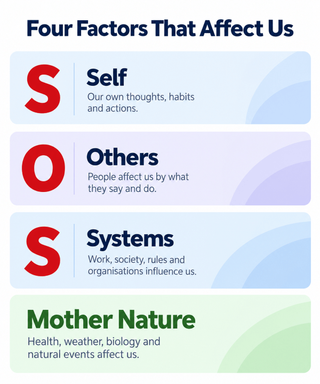
Explore Self, Others, Systems and Mother Nature. We can choose aspects of our own thinking and behaviour, but cannot fully control other people, organisational systems, natural events or changing circumstances.
Distinguish what we can control, what we can influence and what requires intelligent adaptation. Apply this distinction to difficult colleagues, organisational change and unexpected events, directing attention towards constructive action.
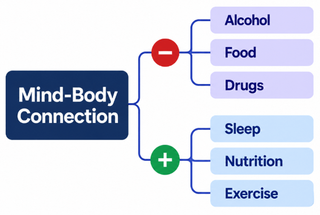
The brain is a physical organ, and its functioning is influenced by our physical condition and daily habits. Mental wellbeing therefore involves both how we use our minds and how we treat our bodies.
Recognise why mental and physical habits both contribute to concentration, emotional responses and the energy needed to work well.
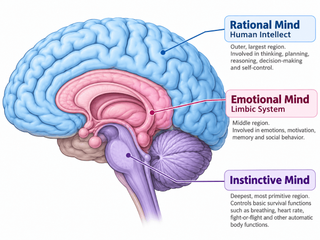
We use Paul MacLean's Triune Brain Theory to explain three fundamental brain functions:
1. Instinctive — Basic Drives: Keeps us alive by regulating essential bodily functions and survival needs.
2. Emotional — Feelings: Produces positive and negative emotions, including happiness, confidence, fear, anger and anxiety.
3. Rational — Logic and Reason: Enables us to think logically, solve problems, make plans, make decisions and achieve goals.
Good mental health involves developing the correct relationship between reason, emotion and instinct.
We use reason to guide our actions, manage our emotions and satisfy our instinctive needs intelligently.
Our central principle is:
"We run it on reason and manage our emotions."
Our interpretations of events influence our emotional experiences. Hearing a crash downstairs and believing someone has broken into the house may produce fear; discovering that a cat knocked over a cup changes the interpretation, even though the original fear was real.
Examine how mistaken assumptions and habitual negative interpretations can produce unnecessary anxiety, anger and resentment. Practise questioning interpretations more rationally and developing more appropriate emotional responses.
Afternoon Session • Developing Constructive Mental and Emotional Habits
Apply practical methods for recognising existing habits, improving emotional self-management and developing rational optimism, then select individual actions for improvement.
The matrix examines thoughts about the past and future through four patterns. Past Bad can involve anger, resentment, guilt and regret; Future Bad can involve worry, anxiety and pessimism; Past Was Good can bring treasured memories and gratitude, but also nostalgia and dissatisfaction with the present.
Future Good represents rational optimism: if we work well today, there are good reasons to believe we can improve the future. This means recognising reality and identifying constructive action, rather than expecting difficulties to disappear automatically.
Use the matrix to recognise habitual patterns and consider more constructive responses to criticism, disagreements and change.
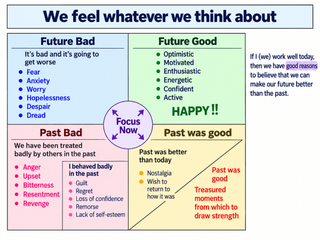
We develop habitual ways of thinking and feeling as well as familiar physical routines. Repeated interpretations may contribute to recurring anger, worry, regret or optimism.
The same setback may prompt one person to become angry, another to lose confidence and a third to examine the facts and take constructive action. Delegates recognise their habitual responses and identify more rational alternatives.
Consider how a psychologically wise person might distribute attention between reasonable concern, justified anger, treasured memories and rational optimism. Fear, sadness, anger and concern can be appropriate when circumstances justify them.
The aim is to develop predominantly constructive and optimistic habits while retaining proportionate responses to difficulties. Compare present habits with a preferred pattern and identify practical improvements, without imposing a universal numerical score.
Examine how alcohol, food and drugs can influence brain activity, judgement, sleep, concentration and emotional responses. Distinguish caffeine, prescribed medicines and non-prescribed or illegal substances, recognising the difference between appropriate medical treatment and harmful substance use.
Explore three constructive habits: sufficient regular sleep, balanced nutrition and exercise. Exercise includes aerobic activity, anaerobic strength and resistance work, and flexibility.
Identify realistic physical habits that can support clearer thinking, emotional wellbeing and energy.
Criticism, setbacks, defeats and imposed change are inevitable features of life. The Mental Health Success Formula helps delegates manage their emotional responses and turn negative feedback into adaptive change.
Apply five stages: Purpose, what are we trying to achieve; Plan, how do we intend to achieve it; Action, what should we do; Feedback, what do the results tell us; and Change, what adaptations will improve future results?
Positive feedback helps us recognise what is working. Negative feedback calls for examining the facts, learning from mistakes and improving plans or actions, or adapting to circumstances we cannot change. Delegates also work through eight practical questions about goals, plans, actions, results, feedback and improvement.
The purpose is to prevent negative events from unnecessarily becoming habitual negative mental and emotional states. Constructive action provides a practical foundation for rational optimism when life does not go according to plan.
Review the individual assessments and select practical actions for improving mental, emotional and physical habits. Identify how to maintain rational optimism and respond constructively to future criticism, setbacks and change.
Leave with specific improvements to apply at work and at home, supported by the post-course resources and three months of telephone coaching.
Availability and Pricing
Course Formats and Delivery Options
Choose from scheduled open workplace mental health courses, live online training or bespoke in-house workplace mental health training for your organisation. Each format covers the same practical methods and learning outcomes.
Online Live Training
£350 +VAT
per delegate
Interactive live sessions delivered via Teams using our superior green-screen technology.
- Same content as face-to-face
- Learn from home or office
- Delivered via MS Teams
- Laptop or tablet with webcam
Bespoke In-House
£2450+VAT
per training day
We come to you. Training delivered at your premises, tailored to your team's specific needs.
- Your premises or online
- Tailored to your organisation
- Dates to suit your schedule
- We can train in your timezone
Course Dates and Venues
Dates and venues will be announced. Please contact us to enquire about open or live online availability, or arrange training for your organisation.
All Our Training Includes
Questions? Call 020 3856 3037 or 01452 856091
Upcoming Dates
Next Available Course Dates
| Date | Format | Price |
|---|---|---|
|
11 February 2027
Online - Teams
|
Online
|
£350 +VAT
|
|
20 April 2027
Online - Teams
|
Online
|
£350 +VAT
|
|
23 June 2027
Online - Teams
|
Online
|
£350 +VAT
|
|
19 August 2027
Online - Teams
|
Online
|
£350 +VAT
|
|
19 October 2027
Online - Teams
|
Online
|
£350 +VAT
|
|
8 December 2027
Online - Teams
|
Online
|
£350 +VAT
|
Frequently Asked Questions
Course FAQs
Have a question that is not answered here?
Book This Course
Questions? Call us on
020 3856 3037Trusted by Leading Organisations
Companies We Have Trained
Customer Reviews
What Delegates Say About This Course
"The course content was structurally well organised and had a good set of exercises, the training manual was easy to read and understand. The trainer's presentation was engaging and interactive. The audience felt involved and I learnt some new techniques."
Hiran Shetty
Capita
"Inspiring and incredibly useful course content delivered with a passion & knowledge of all content areas and is useful particularly use of language and emotional intelligence. I will pledge to use my learning as I do my forward. The presentation was clear, well planned and purposeful! "
Dan Barnett
RES Group
"Training course content was excellent. Lots of information pitched at the right level for me. Learned absolutely loads; some parts were slightly fast but understand that due to the amount of information it was worth getting as much in as possible. I liked the trainer's use of the book and the flip-chart throughout "
Jo Leyland
Pertemps People Development Group
Related Reading
-
Avoiding Overwhelm at Work - Simple Steps to Stay Focused
Avoid overwhelm at work by limiting your focus to three-to-five key tasks, rotating rest breaks, and using clear priorities to cut stress and boost output.
-
How to Improve Employee Mental Wellbeing
Learn how clear thinking, positive coaching and firm goals raise employee mental wellbeing, cut stress and save UK firms billions. Read our hands-on guide.
-
Five Ways to Change How You Feel
Learn five proven steps to change how you feel, lift mood and build a positive mindset. Shift focus, meaning, actions, company and energy for lasting wellbeing.
Better Mental Health, Greater Confidence and Better Performance at Work
Develop practical methods for improving mental and emotional habits, building rational optimism and responding constructively to setbacks and change. Contact Corporate Coach Group to enquire about course dates or training for your organisation.
Or speak to a member of our team directly: