







What Is the OSCAR Coaching Model?
Direct answer: The OSCAR coaching model is a five-stage framework for structured coaching conversations. It helps a coach and coachee define the desired Outcome, understand the current Situation, explore Choices and their consequences, agree specific Actions and Review progress. Developed by Karen Whittleworth and Andrew Gilbert, the model is especially useful for managers who want to help people think clearly, take ownership and improve performance.
OSCAR gives a coaching conversation a logical direction without turning it into a lecture. The coach asks questions, listens carefully and helps the other person build a practical plan. This makes the model useful for performance improvement, personal development, problem solving and workplace learning.
| Stage | Purpose | Key question |
|---|---|---|
| Outcome | Define the result the person wants. | What would a successful outcome look like? |
| Situation | Understand what is happening now. | What is the current position? |
| Choices and consequences | Explore possible routes and assess each option. | What could you do, and what would happen? |
| Actions | Turn the chosen option into a clear plan. | What exactly will you do next? |
| Review | Check progress, learn and adjust the plan. | When and how will progress be reviewed? |
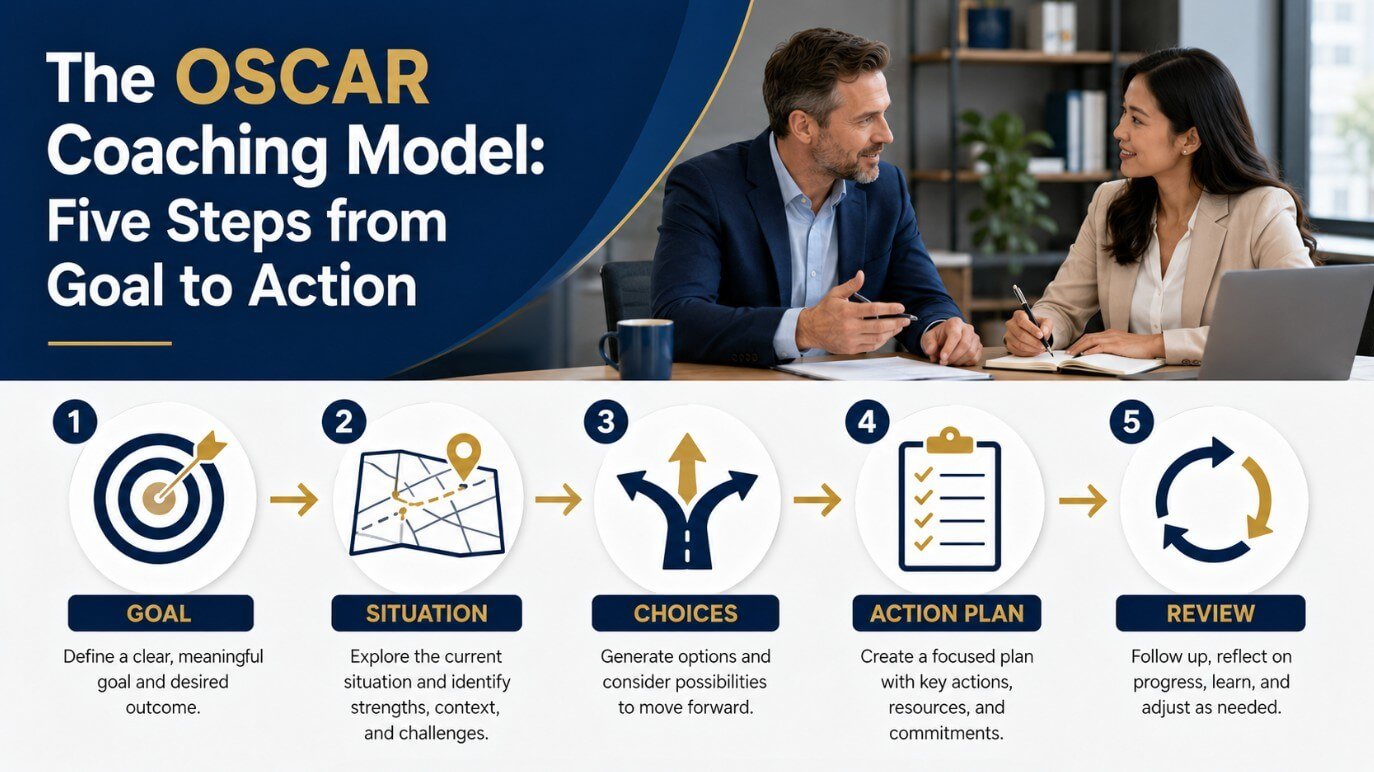
Who Created the OSCAR Coaching Model?
The OSCAR coaching model was developed by Karen Whittleworth and Andrew Gilbert in 2002. It built upon the established GROW coaching model and was designed to make workplace coaching more practical for managers.
The two models share a goal-focused structure, but OSCAR makes the review stage explicit and gives more attention to the consequences of different choices. This encourages the coachee to consider both what they could do and what each option is likely to produce.
1. Outcome: Define the Result
The coaching conversation begins with the Outcome. Before discussing problems in detail, the coach helps the person describe what they want instead. A clear outcome gives the conversation a destination and prevents it becoming a long discussion about everything that is wrong.
A useful outcome should be specific enough to guide action and clear enough to review later. The principles of SMART goal setting can help, although the goal must also matter to the person who is expected to act.
Useful Outcome questions include:
- What do you want to achieve?
- What would a successful result look like?
- Why is this outcome important?
- How will you know when you have achieved it?
2. Situation: Understand the Current Position
Once the outcome is clear, the coach and coachee examine the present Situation. The aim is to establish an accurate starting point, including relevant facts, current performance, previous attempts and obstacles.
This stage should be honest without becoming negative. The coach is not looking for somebody to blame. The purpose is to understand the gap between the present situation and the desired outcome.
Useful Situation questions include:
- What is happening now?
- What evidence do you have?
- What have you already tried?
- What is helping or preventing progress?
- Which parts of the situation can you influence?
3. Choices and Consequences: Explore the Options
The C in OSCAR is commonly described as Choices, with the consequences of each choice considered before a decision is made. The coach encourages the person to generate several possible routes rather than accepting the first idea that appears.
Every choice uses time, effort and resources. It may also create risks or affect other people. Considering consequences helps the coachee choose deliberately rather than react quickly.
Useful Choices and consequences questions include:
- What options are available?
- What else could you try?
- What are the benefits and risks of each option?
- What would happen if you did nothing?
- Which option gives the best chance of achieving the outcome?
The coach may contribute an idea when it is genuinely useful, but should avoid taking ownership away from the coachee. Strong coaching and mentoring skills help managers guide the thinking process without simply issuing instructions.
4. Actions: Agree a Specific Plan
Choices become useful only when they are converted into Actions. At this stage, the coachee selects the best option and defines what will happen, who will do it and when it will be completed.
The action plan should be written down. A written plan exposes vague wording, creates accountability and gives both people something concrete to review.
Useful Actions questions include:
- What exactly will you do?
- What is the first step?
- When will each action be completed?
- What support or resources do you need?
- What might stop you, and how will you respond?
5. Review: Measure Progress and Learn
The final stage is Review. The coach and coachee agree when progress will be checked and what evidence will be used. Review is more than asking whether the task was completed. It should identify what worked, what did not work and what needs to change next.
A constructive review combines accountability with learning. Good feedback should be specific, evidence-based and focused on future improvement. Our guide to giving effective feedback explains how managers can challenge performance without damaging confidence.
Useful Review questions include:
- What progress has been made?
- Which actions worked well?
- What have you learned?
- What needs to be changed?
- What is the next outcome?
OSCAR Coaching Model Workplace Example
Imagine a manager is coaching an employee whose weekly performance report is regularly submitted late.
| OSCAR stage | Example |
|---|---|
| Outcome | The employee wants to submit an accurate report by midday every Friday for the next six weeks. |
| Situation | The report is usually started on Friday morning. Data arrives from several systems, and urgent messages interrupt the work. |
| Choices and consequences | Options include collecting data earlier, blocking focused time, automating part of the report or asking a colleague to check one section. The employee considers the time and risks attached to each option. |
| Actions | The employee will collect data on Thursday, block 3 pm to 4 pm for drafting and create a reusable reporting template. |
| Review | The manager and employee will review delivery time, accuracy and workload after two Fridays, then adjust the process if required. |
The manager has not solved the problem on the employee's behalf. Instead, the employee has examined the issue, chosen a practical response and accepted responsibility for the plan.
When Should Managers Use the OSCAR Model?
OSCAR works best when the person has enough knowledge and authority to take action but would benefit from clearer thinking and a structured conversation. Managers can use it for:
- Improving performance or working habits.
- Planning professional development.
- Preparing for a new responsibility.
- Working through a practical workplace problem.
- Turning feedback into an improvement plan.
- Following up after training.
OSCAR is less suitable when an urgent instruction must be followed immediately, when the manager needs to communicate a fixed decision, or when the issue requires formal disciplinary, medical or specialist support. Coaching questions should not be used to disguise a decision that has already been made.
OSCAR Compared with GROW and OSKAR
| Model | Stages | Useful distinction |
|---|---|---|
| OSCAR | Outcome, Situation, Choices, Actions, Review | Makes review explicit and encourages consideration of consequences. |
| GROW | Goal, Reality, Options, Will or Way Forward | A widely used framework for moving from a goal to committed action. |
| OSKAR | Outcome, Scaling, Know-how and resources, Affirm and action, Review | A solution-focused model that uses scaling and builds on what already works. |
The best model depends on the conversation. OSCAR is particularly useful when a manager wants a clear workplace process that includes option appraisal, action planning and a scheduled review.
Common OSCAR Coaching Mistakes
- Starting with the problem: Define the desired outcome before spending too long on the current difficulty.
- Giving the answer too early: Questions should help the coachee think and take ownership.
- Accepting vague actions: Agree specific tasks, dates and responsibilities.
- Ignoring consequences: Consider the likely effect of each choice before committing.
- Forgetting the review: Set a review date during the coaching conversation, not afterwards.
Develop Practical Coaching Skills
A model is only as effective as the manager using it. Good coaching also requires clear communication, careful listening, well-judged questions and constructive feedback. Our coaching skills guide explains the wider skills that support productive development conversations.
Corporate Coach Group's Coaching and Mentoring Training course gives managers, team leaders and experienced staff practical methods for setting goals, using suggestive questions, giving constructive feedback and helping others build workable action plans.
OSCAR coaching model
OSCAR is a structured five-step coaching model used in business. The coach and coachee agree the desired outcome, study their present situation, list and select the best choices, write a detailed action plan, then review progress and learn. The final step loops back, so the model drives steady, goal-centred improvement.
CG4D Definition
Context: Business coaching
Genus: Model
- Contains five ordered steps: outcome, situation, choices, action, review
- Begins with a clear, measurable outcome that guides all later work
- Ends with a review step that feeds back into the next coaching cycle
- Requires a coach to guide personal or team change conversations
Article Summary
Use OSCAR to change with intent: name the Outcome you want, check your current Situation, weigh your Choices, write clear Action steps, then Review results and loop until the goal is won.