






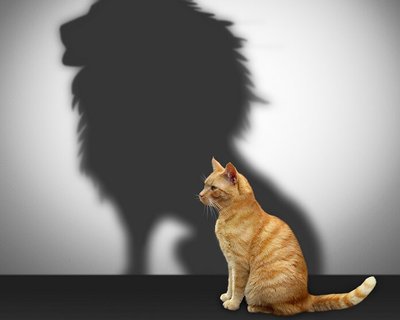
What is Self-Image?
Self-image (or self-concept) is the foundation of personality. It summarises the beliefs a person holds about their own abilities, potentialities and limitations.
It is the basis of people's habitual emotional state, which drives all behaviours and therefore external results.
Self-Image Shapes Behaviour
Everything we do is an expression of our self-image: the way we dress, the way we speak, the jobs we apply for, and the ones we don't.
Our self-concept places limits on our behaviours, often self-imposed.
People rarely behave in ways that contradict their self-image; when they do, they feel fake, perform badly, and quickly return to behaviours that correspond to their self-image.
Origin of the Self-Image
When babies are born, they know practically nothing; all they know is how to suckle and startle at loud noises, or being dropped.
Children very quickly start to assemble a self-concept to describe themselves to themselves.
It is formed from information given to them by parents, siblings, friends, teachers, relatives, and media, including books and films and their own decisions, often made at a very young age.
These decisions then crystallize into firm beliefs. For example, failing at a math problem might lead a child to think, "I'm no good at maths." This belief can crystallize into a conviction, shaping their motivations and actions for life, avoiding math and never developing the skills, thereby living as a non-mathematician, fully convinced that's "just the way I am".
Subconscious Beliefs Asserting Themselves
Beliefs can be classified into two different types: conscious and subconscious. You are aware of your conscious beliefs, like your views on the current government or the existence of God. However, many beliefs are subconscious.
Mental Habits
Just as we have physical habits, like tying shoelaces in the same way every day, we have mental habits that we repeat daily without ever consciously thinking about them.
Bad Habits
Some of our thinking habits are bad because they limit our self-concept, imposing unnecessary restrictions on what we allow ourselves to believe we are capable of.
These are self-imposed limitations, not genetically mediated, and they do not truly represent our potential. They are, instead, expressions of our false beliefs about what we can and cannot do.
Reframe
To improve our emotional state and perform better in all areas, we need to gain a proper perspective on our potentialities and identify and eliminate the subconscious limitations we have imposed on ourselves.
Take the Brakes Off
If we can take the brakes off our personality, we will be able to actualise our full potential, which is our ultimate aim.
Self-image
For personal growth, self-image is a belief system that sums up how you see your own skills, chances and limits. It sits mostly below awareness, rules your daily mood and behaviour, and takes shape in childhood from the words and cues you take in. Change it, and your actions change too.
CG4D Definition
Context: Personal development
Genus: Belief system
- Describes perceived abilities, potential and limits
- Operates largely outside conscious thought
- Directs habitual feelings, choices and results
- Formed early from social feedback and personal decisions
Article Summary
Your life mirrors the picture you hold of yourself; when you spot and replace limiting beliefs, you lift mood, widen action and unlock true potential.