







Problem Solving Skills: Success Requires That We Solve Two Kinds of Problems
Problem solving skills are essential for success at work and in life. Whether problems come from outside circumstances or from the goals we choose to set, our success depends on our ability to think clearly, make a written plan, and take effective action.
Problem solving is the ability to identify what is wrong, decide what needs to happen next, and organise practical actions that move us towards a better result.
If we want to be successful, then we must learn how to solve problems.
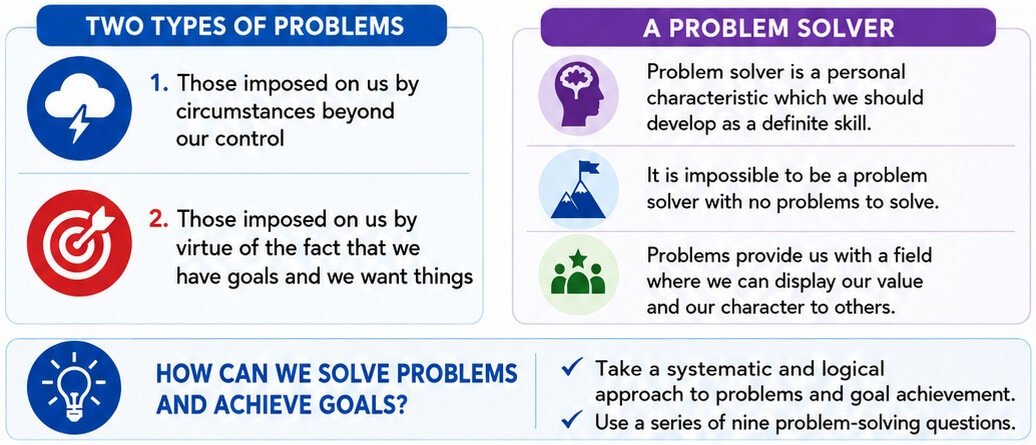
The Two Types of Problems We Need to Solve
- Problems originating from outside circumstances. These are the problems that arrive through the actions of other people, through changing events, or through natural events.
- Problems that originate when we set goals. Whenever we set a goal for a better future, we create the problem of how to achieve it.
In both cases, success depends on our ability to solve problems.
This means that having problems is a good thing, because problems provide the context in which we can develop our character and value.
Nine Problem-Solving Questions
To solve problems, we ask and answer nine problem-solving questions:
- What do we know, and how do we know it?
- What do we need to find out?
- Based on what we know, what is our most rational and optimistic goal?
- Who can help us?
- What resources do we need?
- What human qualities must we use?
- What is our best written plan?
- Who will do what, by when?
- What are the first three immediate actions?
How to Turn Goals Into a Practical Plan
In addition, we set out a mind map that breaks goals into parts and puts them onto a timeline.
It looks like this:
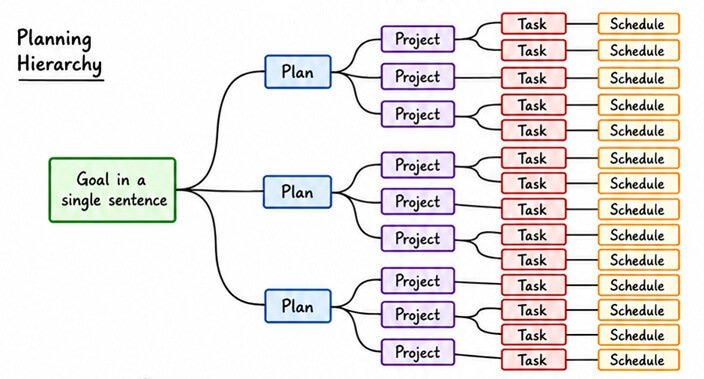
A goal becomes practical when it is stated in a single sentence.
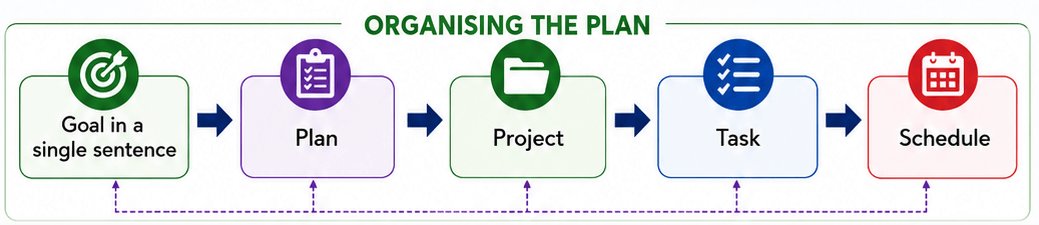
The goal then becomes a plan. The plan becomes projects. The projects become tasks. The tasks become scheduled actions.
This is how winning is done.
How to Use This Problem-Solving Method
When faced with a problem, write down the facts, define the goal, list the resources you need, and decide the first three actions. This turns worry into action and gives the mind a clear route forward.
These problem solving skills are closely linked to leadership training, decision making, time management training and personal development training.
Problems Are Opportunities to Display Value
We should remember that problems are opportunities to display our value to other people.
They give us the chance to show clear thought, calm action, practical skill, and reliable character.
Problems provide the stage upon which problem solvers can act and develop their performance.
If we think in this way, then problems become opportunities to prove our value.
We meet them with reason, courage, patience, and a written plan.
We use problems to become stronger, more useful, and more valuable to the people around us.
Example: Solving a Workplace Problem
Imagine a project is running late. First, write down what is known: the deadline, the missing work, the people involved, and the reason for the delay. Then define the goal: to deliver the most important parts of the project by the agreed date. Next, list who can help, what resources are needed, and the first three actions. This turns a vague worry into a practical plan.
problem solving skills
In workplace learning, problem solving skills are a skill set that helps a person find the real problem, check the facts, choose a clear goal, write a plan with tasks, people and dates, and take the first actions. The skill is complete only when clear thought, a written plan and prompt action work together.
CG4D Definition
Context: Workplace learning
Genus: Skill set
- Finds the real problem and checks the known facts
- Chooses a clear goal based on what is known
- Writes a plan with tasks, people and dates
- Takes the first actions and checks progress
Article Summary
Problem solving skills turn problems into useful action: first check the facts, then set a clear goal, write a plan, name who will do what by when, and start the first three actions. Whether the problem comes from outside events or from a goal you choose, this method helps you think with reason, act with calm, and show value at work.